Key Takeaways
Retro emulation can help keep games accessible, but the ethics depend on more than whether an emulator runs well. I try to consider where the game file came from, who benefits, and what responsible access looks like.
- An emulator and a game file are different things, with different ethical and legal questions.
- Emulation can support preservation, learning, accessibility, and continued play.
- Unauthorised copies may affect the people and businesses that made or distribute games.
- A game being hard to find—or freely downloadable—does not by itself settle whether sharing or using it is permitted.
- Official releases, open-source games, and permission-aware sharing are practical ways to support retro gaming.
What retro emulation ethics means
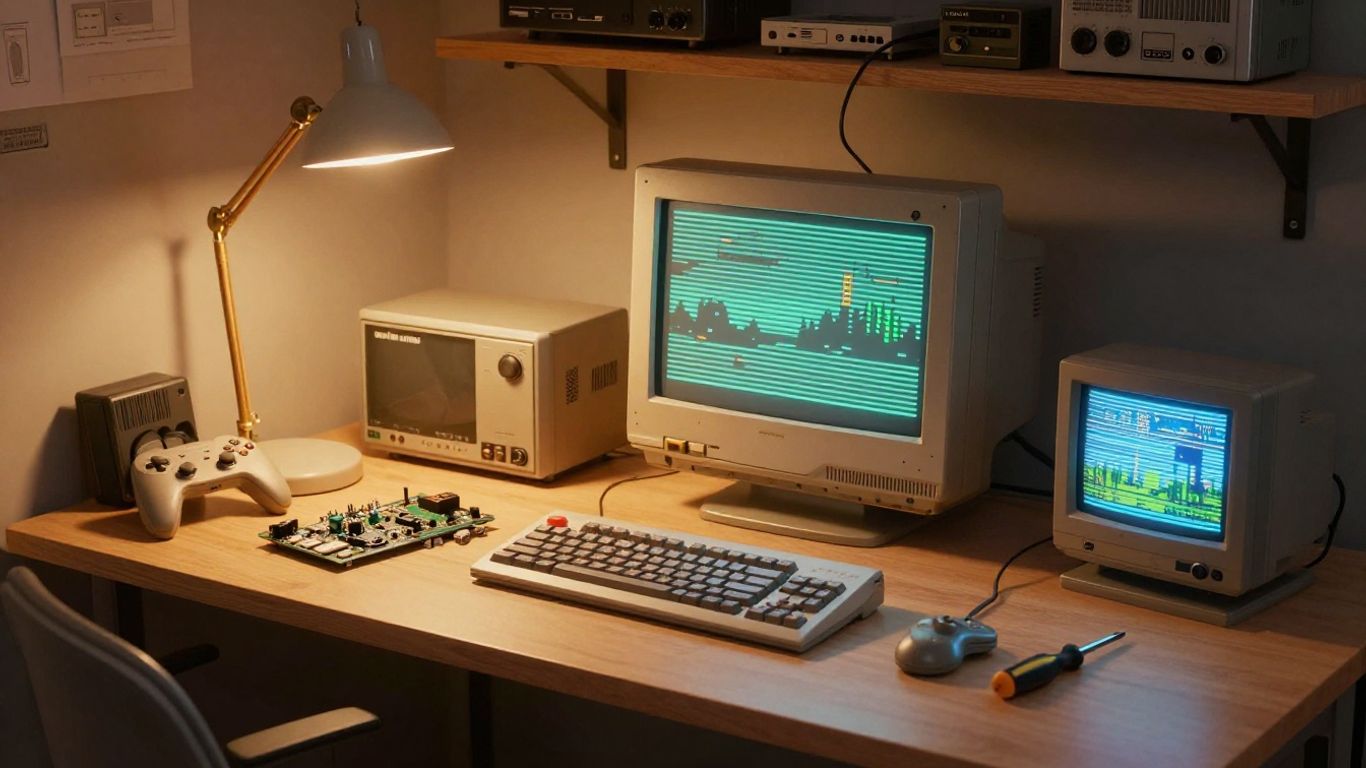
When I restore old consoles and PCs, I’m reminded that playing an old game involves more than getting the hardware to power on. Emulation raises questions about access, ownership, preservation, and the value of creative work. The context matters as much as the technology: where a game file came from and how it is being used can change the ethical picture.
How emulators differ from game files
An emulator is software that imitates aspects of a system so that software made for that system can run in another environment. A game file, often called a ROM in retro gaming, contains the game itself or a copy of its data. They are related in use, but they are not the same item, so considering one does not answer every question about the other.
This distinction is easier to see when the two are set side by side:
| Item | What it generally does | Ethical question to consider |
|---|---|---|
| Emulator | Recreates aspects of a console or computer in software | How was it developed and distributed? |
| Game file | Holds game data used by compatible software | Who created, owns, or distributes the game? |
| Original hardware | Runs software in its intended physical system | Is the hardware available and usable? |
| Official re-release | Makes a game available through an authorised channel | Does this option meet the player’s needs? |
The table is a starting point, not a verdict. I think about the emulator and the game file separately, then look at the circumstances around the particular game and its distribution.
Why ethical questions go beyond technical legality
Legal rules differ between places and can depend on details that are not obvious from a download page. Ethics also asks questions that a legal label may not settle: whether creators are being supported, whether an archive is helping preserve a game, or whether a player is relying on a copy shared without permission. I treat those as separate considerations rather than assuming that “legal” and “ethical” always mean the same thing.
How ownership, access, and preservation can conflict
A game may matter to players and researchers even when access is limited, but that interest does not automatically erase the rights of the people or organisations connected to it. At the same time, a title may be difficult to experience if the original hardware fails or no authorised version is available. For me, the hard part is acknowledging both concerns without using preservation as a blanket excuse for every kind of copying.
The case for emulation
I understand why emulation appeals to people who care about old games. Hardware wears out, formats become awkward to use, and a piece of software can slip out of ordinary reach. Emulation can help keep games playable, though the value of that access still depends on how the game is obtained and used.
Keeping unavailable games playable
When an older title is no longer easy to find through an authorised release, emulation may be one way people continue to experience it. That access can matter to someone revisiting a childhood game, or to a new player encountering it for the first time. I still distinguish the goal of keeping a game in reach from the method used to obtain its files.
Preserving games that rely on obsolete hardware
Old consoles and computers can fail, and replacement parts or working examples may be difficult to locate. Emulation offers a way to run software without relying on every original component remaining in working order. It cannot reproduce every physical detail of playing on original hardware, but it can help retain access to software that might otherwise become harder to experience.
Supporting research, education, and cultural history
Games can offer clues about the technology, design choices, and popular culture of the time in which they were made. Researchers and educators may want to examine how a game works or how it was received, while collectors may document hardware and software for the same broad purpose. The value of that work is clearest when materials are handled responsibly and their origins are recorded rather than obscured.
Enabling accessibility and customization
Playing through an emulator can give people options to adjust controls or other settings, depending on the software and device they use. Those choices may make a game more comfortable to play for someone whose needs differ from the original design assumptions. I see this as a genuine benefit, while recognising that accessibility features do not answer questions about the source or permission for a game file.
The concerns raised by creators and rights holders
Emulation discussions can focus so heavily on preservation that the interests of creators and rights holders fade into the background. Games are creative works, and unauthorised distribution can raise concerns about control and potential lost sales. I try not to assume that every copy causes the same harm, but neither do I treat convenience as proof that no one is affected.
How unauthorized copies can affect revenue
If a game is available through an authorised purchase, a player choosing an unauthorised copy may mean the people or businesses involved do not receive a sale they could otherwise have made. The actual effect can vary: a game may be out of print, or the rights and revenue arrangements may be complicated. That uncertainty is a reason to avoid broad claims that copying is always harmless, not a reason to pretend every situation is identical.
Why licensing and ownership can be unclear
A game’s original developer, publisher, platform holder, and current rights holder may not be the same entity. Rights can also involve music, artwork, or other elements, making a title’s status difficult for an ordinary player to work out. I don’t take a missing re-release or an unclear ownership trail as proof that a game is free to copy or distribute.
What risks unofficial downloads create for players
Unofficial download sites can leave players uncertain about what a file contains, who supplied it, or whether it has been altered. There may also be practical device-security concerns when downloading files from sources that offer little information or accountability. A cautious approach is to avoid treating a convenient link as a trustworthy or authorised source.
How community norms can shape perceptions of harm
In retro gaming communities, people may share files or advice because they want others to experience a game or help preserve it. Good intentions can shape how an action feels within a group, but they do not necessarily settle its effect on creators or the rights holder. I find it useful to ask whether a community norm is making responsible access easier—or simply making a questionable practice seem ordinary.
How to think about ROMs and game files
The phrase “I own the game” can mean different things in everyday conversation, and it does not resolve every question about making, downloading, or sharing a digital copy. Rules depend on the jurisdiction and the circumstances, so I avoid treating a general online explanation as a definitive answer for every case. A careful decision starts with the file’s source and the permissions attached to it.
Distinguishing personal backups from downloaded copies
Some players see a personal backup of a game they own as different from downloading a copy made available by someone else. That distinction may matter ethically, but legal treatment can depend on local rules and particular facts. I don’t assume that owning a cartridge or disc automatically grants permission to make, obtain, or share every associated digital file.
Considering the source and distribution of a game
A file offered by an authorised publisher or rights holder has a different context from one posted by an unknown account without permission information. The source can also tell me whether the game is a homebrew release, an open-source project, or a commercial work. Before using a file, I look for clear information about who distributed it and what uses are allowed.
Weighing legal rules that vary by jurisdiction
Copyright and related rules are not identical everywhere, and details such as copying, circumvention, and distribution may be treated differently across jurisdictions. A general article can help frame the questions, but it cannot determine how a particular situation is treated where a reader lives. If the legal position matters to a decision, it is sensible to consult reliable local information or a qualified professional rather than rely on assumptions.
Recognizing that availability does not automatically imply permission
A download can be easy to find and still lack clear authorisation. Search results, old forum posts, and long-running community archives do not necessarily establish who owns the rights or whether the file can be shared. I treat availability as a clue about access, not as proof of permission.
More responsible ways to support retro gaming
There are ways to enjoy older games while giving more thought to the people and institutions connected to them. Availability varies, and no single route suits every title or player. I start by checking for authorised access, then look for clearly permitted projects and preservation work that explains its approach.
Buying official re-releases when available
An official re-release can provide a straightforward way to play a classic game while supporting the channel distributing it. It may not be identical to original hardware, and it may not include every title someone hopes to find. Still, when it is available and works for the player, it is worth considering before turning to an uncertain source.
Supporting developers, publishers, and preservation groups
Purchasing authorised releases is one way to support the people and organisations involved in making games accessible. Preservation groups may also document software, hardware, and history, with different projects taking different approaches to access and rights. I look for clear descriptions of a group’s work and ways to contribute that fit its stated purpose.
Using open-source games and legally distributed homebrew
Open-source games and homebrew releases can be appealing options when their creators clearly state how the work may be used. Some projects allow sharing under specified terms; others may set limits or ask users to follow particular conditions. Reading the project’s own permission information helps me avoid treating the label “homebrew” as automatic permission for every use.
Checking permissions before sharing files or archives
Before I pass along a file or point someone to an archive, I try to check the permissions and context rather than assuming a community has already settled the matter. A short set of questions can make that check more practical:
- Is the file distributed by its creator or an authorised source?
- Does the project describe what copying or sharing is allowed?
- Does the archive explain where its materials came from?
- Could I direct someone to an authorised release instead?
If the answers are unclear, I can pause rather than redistribute the file. That small bit of care keeps the focus on access without treating uncertainty as consent.
Applying an ethical decision-making framework
I don’t think there is one quick test that resolves every retro emulation question. Instead, I try to make the reasoning visible: what access exists, who might benefit or be affected, and whether my preservation goal is being used to justify an easier but less considerate choice. That process can be revisited as circumstances change.
Ask whether the game is commercially available
I first check whether the game can be bought or played through an authorised channel. If it can, that option may support those involved in making or distributing it and reduce uncertainty about the source. If it cannot, the access problem is real, but it still does not settle the permission question by itself.
Consider who benefits and who may be harmed
A decision may benefit players, researchers, or a preservation effort, while also raising concerns for creators or rights holders. I try to name both sides instead of assuming that one group’s interest cancels out another’s. Where the likely effects are hard to judge, caution and transparency are more useful than confident claims.
Separate preservation goals from convenience
Preservation is about keeping material available and understandable over time; convenience is about making something easier to access now. The two can overlap, but they are not interchangeable. I ask whether a choice genuinely supports documentation or continued access, or whether “preservation” is simply the label I have put on an easy download.
Revisit decisions as official access options change
A game that once had no authorised release may later become available through an official channel. New information about ownership or permissions can also change how a file should be treated. I’m comfortable revisiting an old decision rather than assuming that today’s circumstances will stay the same.
Conclusion
Retro emulation ethics is less about declaring every emulator good or every download bad than about looking carefully at access, source, permission, and impact. As someone who restores old systems, I value the chance to keep games playable, but I also want that work to respect the people behind them. When I can, I choose clear, authorised routes and treat uncertain files with care.
Frequently Asked Questions
Is using an emulator the same as downloading a game?
No. An emulator is software that imitates aspects of a system, while a game file contains the game’s data. The ethical and legal questions around each can differ.
Does owning an original cartridge mean I can download a ROM?
Not necessarily. Ownership of a physical copy does not automatically answer whether making or downloading a digital copy is permitted. Rules and circumstances vary by jurisdiction.
Are games that are no longer sold free to download?
Not automatically. A game’s commercial availability and the permission to copy or distribute it are separate questions, and rights may still exist even when a title is hard to buy.
Can emulation help preserve older games?
It can help people access and study software that may depend on ageing hardware. Preservation work is strongest when it also considers documentation, provenance, and permissions.
Are homebrew games always free to share?
No. Creators can set different terms for their work. Check the project’s own information to understand whether copying, sharing, or modification is allowed.
What should I check before downloading a game file?
Look for a clear source, information about who distributes the file, and stated permissions. A file being easy to find does not confirm that it is authorised or safe.
What is a considerate way to support retro gaming?
Consider authorised re-releases when available, support preservation work with clear aims, and respect the permissions attached to homebrew and open-source projects. When a file’s status is uncertain, avoid sharing it as though permission were established.